Authors Note: ‘black’ in the context of this article has absolutely nothing to do with human skin pigment. It is an idiom that expresses a figurative and non-literal meaning. It relates to personal conduct, non-conformity, attitude and human behavior.
According to dominant cosmological theory, dark matter is a form of matter that exists in space and which accounts for 85% of the matter in the universe.
This is a delightful delicious soup that will satisfy even the most fussy eater including children (well, most children). Cabbage is a good source of sinigrin and sinigrin is one of cabbage's sulfur-containing glucosinolates that has received special attention in cancer prevention research. The sinigrin in cabbage can be also converted into allyl-isothiocyanate (AITC).
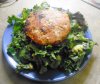
Another one of our evening dinner favorites for two. This meal is quick to prepare and well worth the effort. Protein quantity is great and the quality is outstanding. What's better than wild salmon? One could argue that wild fish is one of the best foods on the planet. The onions are hot but very tasty.
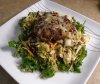
Here’s a great low-carb, low-glycemic, keto-friendly summer meal for 1-2 people. It's quick and easy to put together and is a great source of magnesium, chlorophyll, essential fatty acids, fiber and high-quality protein.
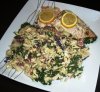
Here’s a great idea for an evening meal for 1-2 people. This dish is definitely keto-friendly yet surprisingly filling. Overall this presentation is alkaline forming. I estimate the protein quantity at about 65 grams, sporting a biological value of 100+. It provides omega-3 rich EPA from wild fish and ALA from pumpkin seeds. Lots of carotenoids and flavonoids to build healthy strong cell membranes.
This dish is delicious and delectable. Pure enjoyment in each and every bite. This scrumptious desert snack treat is as clean as a whistle. Ancients myths proclaim the healing virtue of sesame with its unique source of Vitamin T. Vitamin T, or torulitine, has been identified in egg yolks and sesame seeds. Halva originates from the Middle East and Asia.
This bright-green protein enriched primer salad is designed for someone with a big appetite as it packs a solid punch. For some it might even be a complete meal. The secret to getting your salad in on a regular basis is to eat it first on its own before the next course.
This medley of fresh, chopped, crunchy raw vegetables and herring is one of Cory's favorite all-time at-home lunches. It's called a Robot Lunch Salad because like a robot, Cory makes it exactly the same way, at virtually the same time everyday and also enjoys this delicacy as if he's never eaten it before and never will again.
Submitted by admin on September 26, 2019 - 12:06pm
This is a warming, super easy to make comforting stew. There’s nothing like a stew on a cool autumn evening. Stews resemble soups but because they have less liquid and cooking times, stews have a thicker, gravy-like texture. Stews are convenient, quick and cost effective. Great for busy professionals and/or families.
This is a fabulous appetizer, however, it can be a full-on meal as well. The holiday season is here and this the perfect dish to take to a potluck or serve guests as snack with cocktails. It’s fresh, refreshing, alkaline and it’s delicious too! What could be better than that?
Gazpacho is a cold Spanish tomato based raw vegetable soup, originating in the southern region of Andalucia. Gazpacho is widely consumed throughout Spain. The word gazpacho is believed to come from the word "caspa", meaning "residue" or "fragments", an allusion to the small pieces of bread and vegetables in the original gazpacho soup.
Performance anxiety consists of psychological and physical symptoms brought about by a sense of apprehension of a perceived threat. This state can differ according to the situation and the individual. It could be related to public speaking, a musical performance, acting on stage or asking your boss for a raise.
This is one of my favorite topics, pastimes and hobbies, but of course I say that pretty much about everything I do and talk about. "Exercise is not an option." That for sure is one of my favorite quotes. Exercise is a state of mind and a consciousness. Like health and nutrition they’re all connected. They’re dependent on each other.
Nutrition comes after “Sports” but never underestimate its power. Its potency goes way beyond what most people can even comprehend. Nutrition is what every living thing requires to sustain itself, to sustain its life and to enhance its tolerance to any form of stress.
These are a real hit over the holidays and don’t take any time to make. This is a very healthful sweet snack treat. You can make the balls bigger or smaller and you can add whatever you like to them. I doubled the recipe.
Here’s the scoop on these little black beans. They’re loaded with a rare combination of both protein and fiber. Per 100 grams of beans you’ll get 21 grams protein, 16 grams fiber, 63 grams carbohydrates and a whopping 1500 grams of potassium. Black beans are very in low in fat and sodium.
Periodization is a training system that changes workouts at regular intervals of time. The concept originated from the former Eastern Bloc countries of the Soviet Union and East Germany and was developed to assist world class athletes succeed in competition. Today periodization is recognized as an integral component of exercise training for all fitness athletes.




 This dish is delicious and delectable. Pure enjoyment in each and every bite. This scrumptious desert snack treat is as clean as a whistle. Ancients myths proclaim the healing virtue of sesame with its unique source of Vitamin T. Vitamin T, or torulitine, has been identified in egg yolks and sesame seeds. Halva originates from the Middle East and Asia.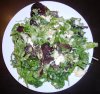


 Here’s the scoop on these little black beans. They’re loaded with a rare combination of both protein and fiber. Per 100 grams of beans you’ll get 21 grams protein, 16 grams fiber, 63 grams carbohydrates and a whopping 1500 grams of potassium. Black beans are very in low in fat and sodium.